Countable and Uncountable Nouns
NOMBRES CONTABLES E INCONTABLES
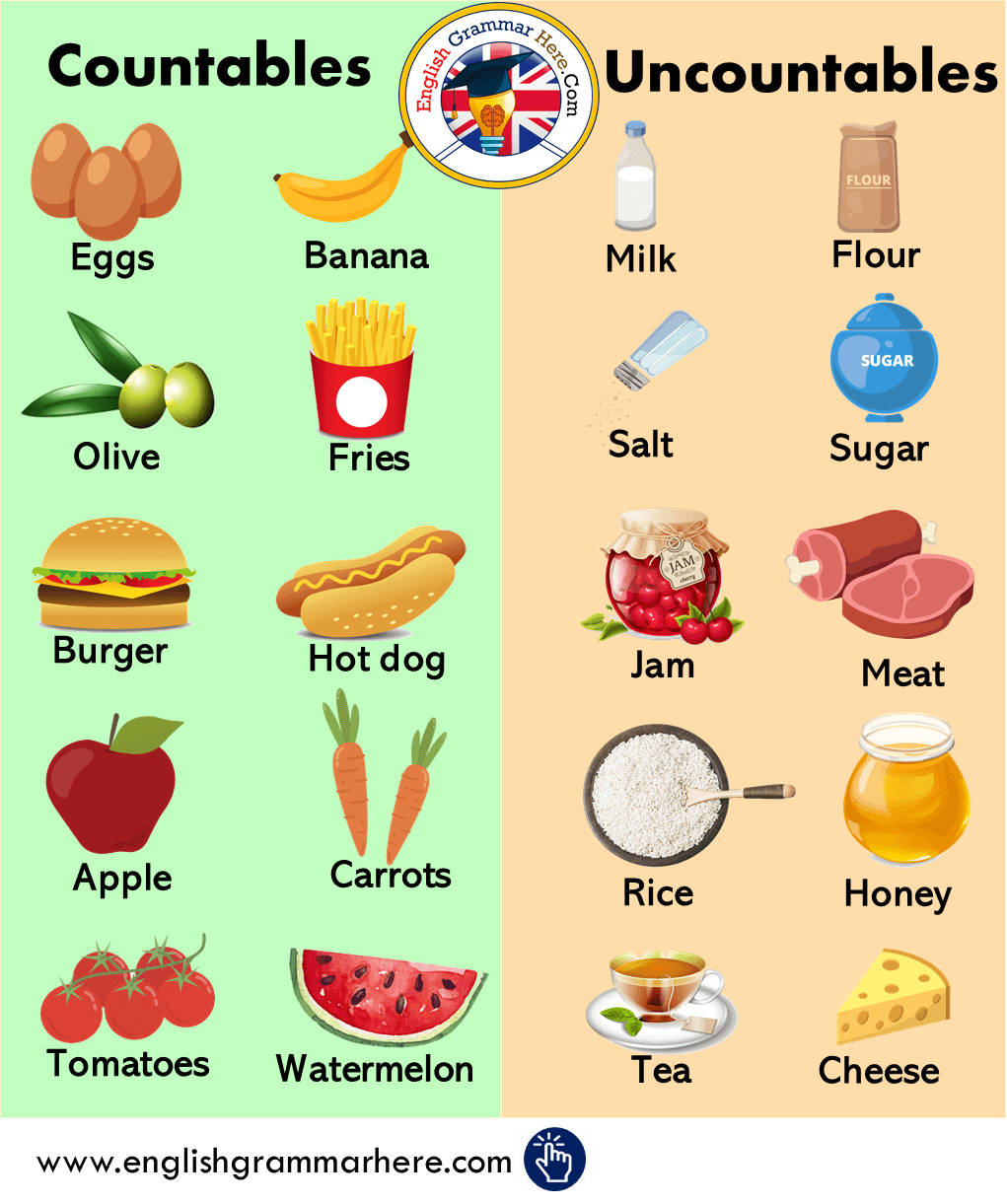
Es importante distinguir los nombres contables e incontables en inglés, ya que implican el uso de diferentes determinantes y verbos.
NOMBRES CONTABLES
Los nombres contables se refieren a cosas que podemos contar utilizando números. Tienen una forma para el singular y otra para el plural. El singular puede emplear el determinante "a" o "an". Para preguntar por la cantidad de un nombre contable, utilizamos "How many?" con el nombre contable en plural.
| Singular | Plural |
|---|---|
| one dog | two dogs |
| one horse | two horses |
| one man | two men |
| one idea | two ideas |
| one shop | two shops |
EJEMPLOS
- She has three dogs.
- I own a house.
- I would like two books please.
- How many friends do you have?
NOMBRES INCONTABLES
Los nombres incontables se refieren a cosas que no podemos contar. Pueden identificar ideas o cualidades abstractas y objetos físicos que son demasiado pequeños o amorfos como para contarlos (líquidos, sustancias en polvo, gases, etc.). Los nombres incontables llevan el verbo en singular. De manera general, no tienen forma plural.
EJEMPLOS
- tea
- sugar
- water
- air
- rice
- knowledge
- beauty
- anger
- fear
- love
- money
- research
- safety
- evidence
No podemos usar a/an con estos nombres. Para expresar una cantidad de un nombre incontable, usamos palabras o expresiones como some, a lot of, much, a bit of, a great deal of , o unidades de medida como a cup of, a bag of, 1kg of, 1L of, a handful of, a pinch of, an hour of, a day of. Para preguntar por la cantidad de un nombre incontable utilizamos "How much?"
EJEMPLOS
- There has been a lot of research into the causes of this disease.
- He gave me a great deal of advice before my interview.
- Can you give me some information about uncountable nouns?
- He did not have much sugar left.
- Measure 1 cup of water, 300g of flour, and 1 teaspoon of salt.
- How much rice do you want?
NOTA IMPORTANTE
Algunos nombre son contables en otros idiomas e incontables en inglés. En estos casos, es preciso seguir las reglas que se refieren a los nombres incontables. Los más corrientes son:
accommodation, advice, baggage, behavior, bread, furniture, information, luggage, news, progress, traffic, travel, trouble, weather, work
accommodation, advice, baggage, behavior, bread, furniture, information, luggage, news, progress, traffic, travel, trouble, weather, work
EJEMPLOS
- I would like to give you some advice.
- How much bread should I bring?
- I didn't make much progress today.
- This looks like a lot of trouble to me.
- We did an hour of work yesterday.
Tenga cuidado con el nombre hair: en principio, es incontable en inglés y no se usa en plural. Únicamente se considera contable cuando se refiere a cabellos o pelos individuales.
EJEMPLOS- She has long blond hair.
- The child's hair was curly.
- I washed my hair yesterday.
- My father is getting a few grey hairs now. (refers to individual hairs)
- I found a hair in my soup! (refers to a single strand of hair)
Fuente: https://www.ef.com.co/recursos-aprender-ingles/gramatica-inglesa/nombres-contables-incontables/
ACTIVIDAD


Comentarios
Publicar un comentario